On distance
- The thick layer of dust makes me cough, and the damp air makes it hard to breathe. I have to open the windows and dust the surfaces.
- Listening to Sarabande reminded me of the blog and of the annual payment; so, I had to re-evaluate whether to revive it or pull the plug. You can call it growth or perfectionism, but I am not entirely satisfied with what I wrote. There is definitely food for thought here and there, yet if I started over, it would be differently organized and somehow more coherent.
- A blog isn’t the medium for such endeavors. It should be a book, and the research should be more methodical. I was on the verge of cancelling the subscription when I realized that I could redefine it as a journal of some random thoughts that could hopefully interest you — and your input could challenge my point of view.
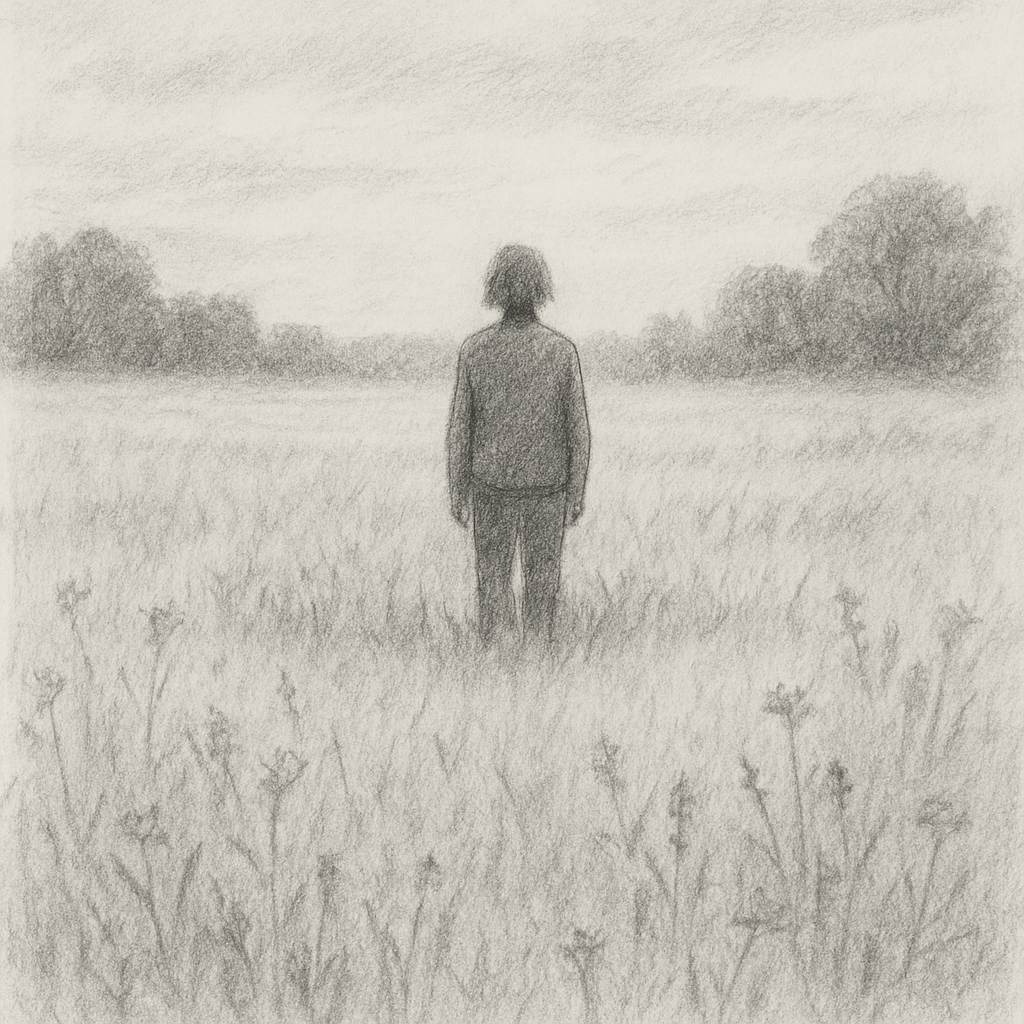
- One idea that lingered in my mind for a while was the concept of distance and its impact on judgment or knowledge. Looking at this picture, we can say that a person is standing far from us, but we can’t tell if we know them or not. We need more details to identify them.
- Let’s loosely define the process of breaking a whole into parts as analysis, and its inverse — combining parts to create a whole — as synthesis. These two complementary approaches must be applied in a balanced way so we can sharpen our understanding or judgment. At this point, we need to approach the person to analyze them. It seems that the closer we get, the more details we can perceive.
- The concept of distance can be metaphorically used when we talk about distance in time. The closer we are to an event, either in the past or future, the more details we can recognize. Knowledge can also be seen as getting closer to phenomena.
- The crucial point about the analogy is that there’s an optimal distance in any observation. Getting too close can also distort perception. In a part of analyzing Picasso’s paintings, Hockney asked the readers why Picasso’s models are so disproportionate, as if Picasso didn’t like them at all. He then answered: Picasso was observing them too closely. Try it yourself. Watch a close person’s face from an inch away — then you’ll see how the proportions change and the familiarity fades.
- Experts in a field can develop myopia that hinders synthesis. Freud’s theory of sexual repression, despite being insightful, can be easily criticized for overemphasizing its impact on people’s thoughts and actions.
- This discussion isn’t all theoretical or transcendental. Being too close limits our vision and impairs judgment — be it a parent or a lover — which can lead to wrong decisions and irreversible damages.
- The dominant interpretation of the myth of Icarus is the cost of overreaching in the pursuit of truth. I’d rather see it in a more general way: it depicts the dangers of getting too close to things or people we love.
- For instance, to think about death, we should maintain a healthy distance. Ignoring death or standing too far from it makes us appreciate less the value of life. On the other hand, being consumed by the thought of inevitable death can be paralyzing and depressing.
- I started this blog with the notion of Death as the fundamental meaning of life, almost eight years ago. What I hadn’t known back then was the concept of optimal distance — because it might cause harm or misunderstanding. If I wrote it again, I’d insert this discussion to make sure the readers stand at a safe distance.
- I’m going to write — maybe not weekly or anything — but whenever I find an interesting idea, I’ll share it with you.
Categories: Uncategorized
 The 3rd Sigma